
Problem area
Users couldn’t tell which products were relevant to their institution
The “Solutions” landing page was a key entry point for customers exploring our ed-tech products. While traffic was high, the page was underperforming. Users were struggling to find what they needed, leading to low engagement and missed demo opportunities.
This was both a user and business problem. Friction at the landing page directly limited revenue opportunities and slowed adoption of self-service solutions. My challenge was to reimagine the landing page as a strategic driver of engagement and growth, not just a collection of links.
Before redesign
Issue 1
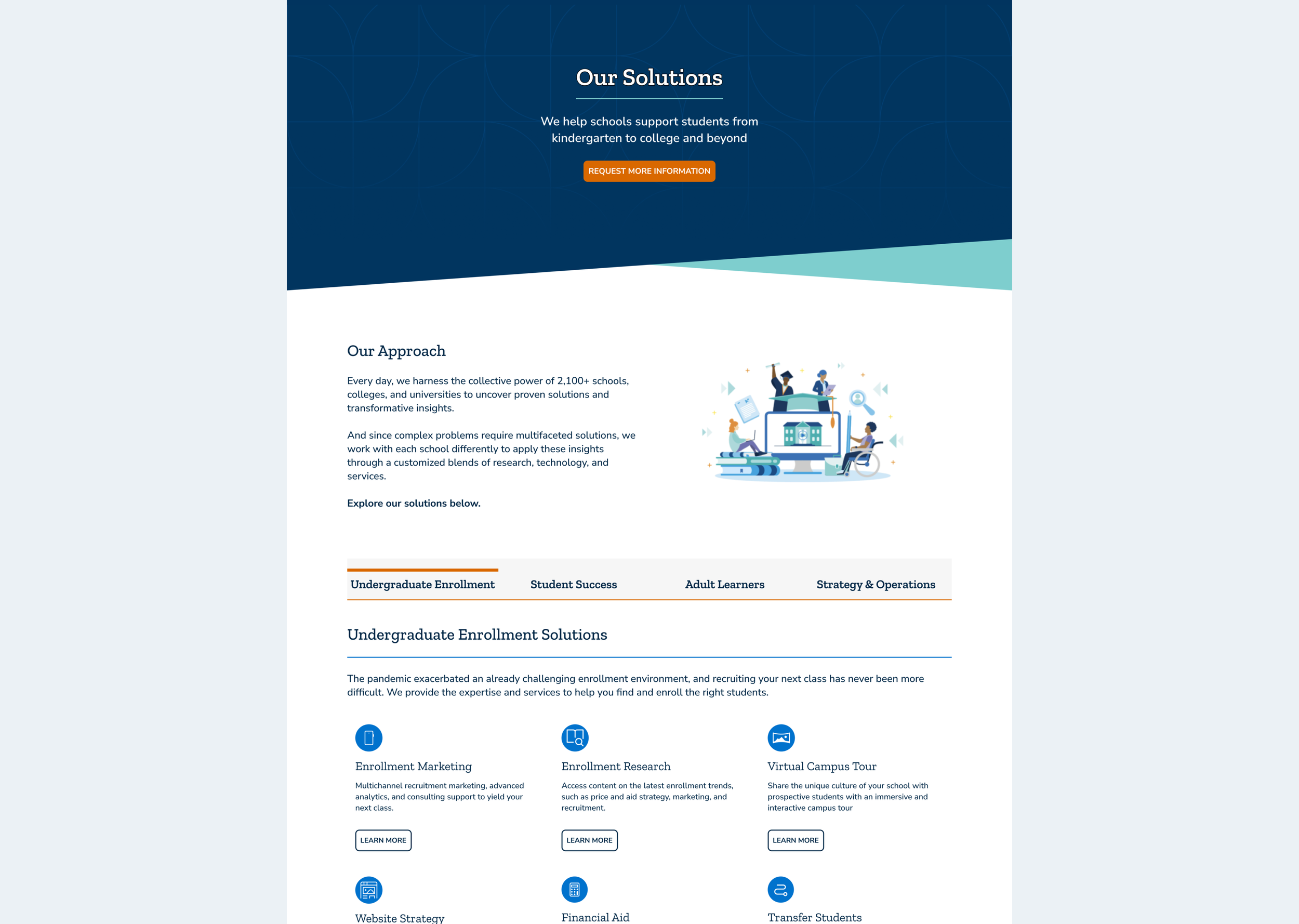
The page lacked segmentation. Products were grouped by internal solution categories rather than how users defined their problems and goals.
Issue 2
Product descriptions were filled with internal jargon, making it difficult for users to quickly determ who the product was for and what exactly it did.
“I just spent several minutes searching around and not finding anything applicable to me until I realized I was in higher ed and not K-12. This was not clear to me initially based on the layout of this page.”
Survey Participant
Design goals
What I aimed to achieve
Clarify product relevance
Users can quickly understand which solutions apply to their institution type.
Reduce decision friction
Align product pillars, labels, and content structure to user mental models.
Increase demo readiness
Outcome-driven content that supports self-serve exploration
Design decision 01
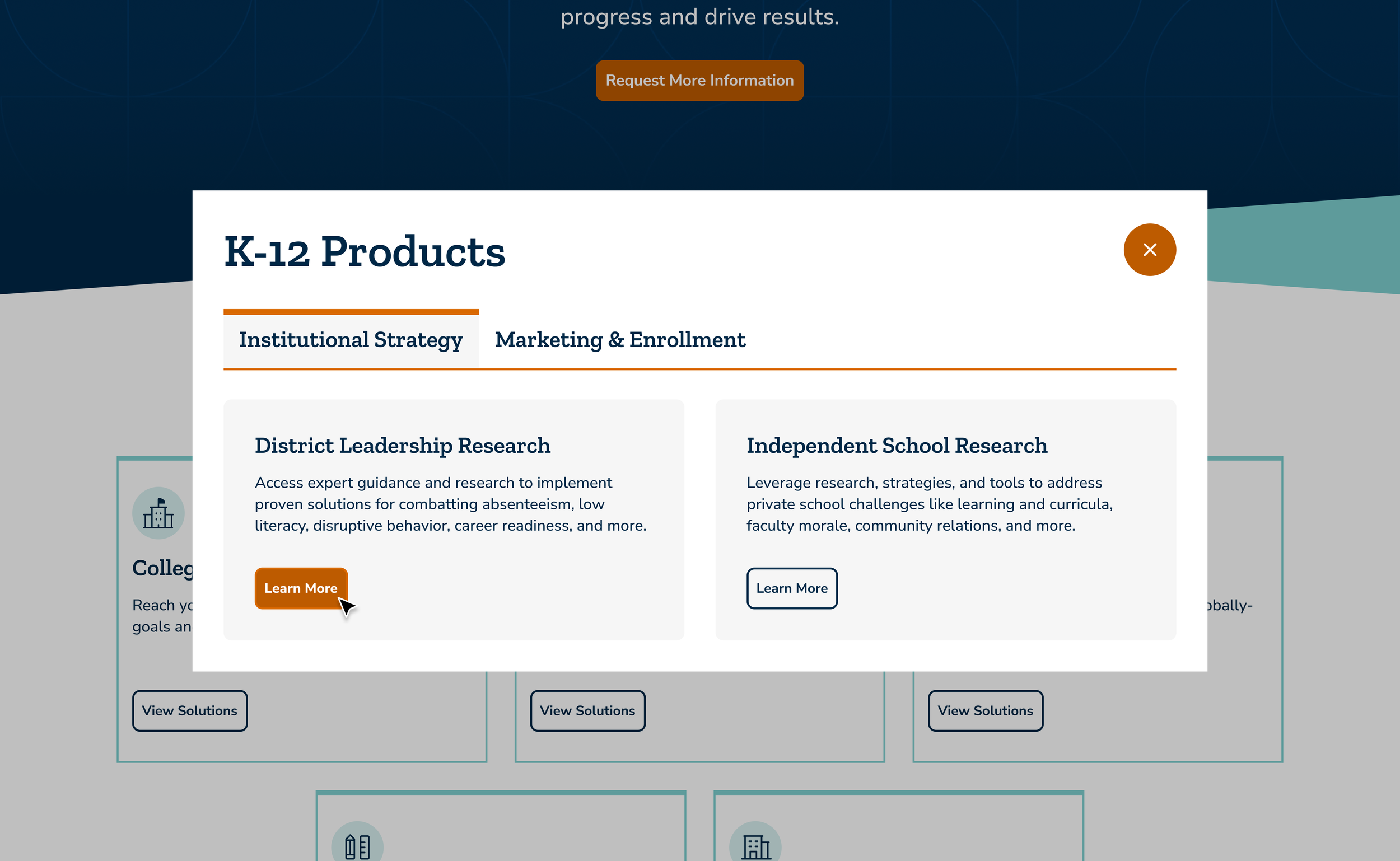
Reorganize product architecture to reduce choice friction
User research showed two major blockers in product discovery:
Institution ambiguity: Users couldn’t tell which products applied to their institution type, causing unnecessary backtracking
Unintuitive pillars: Topic pillars didn’t match user mental models, creating hesitation at the first decision point
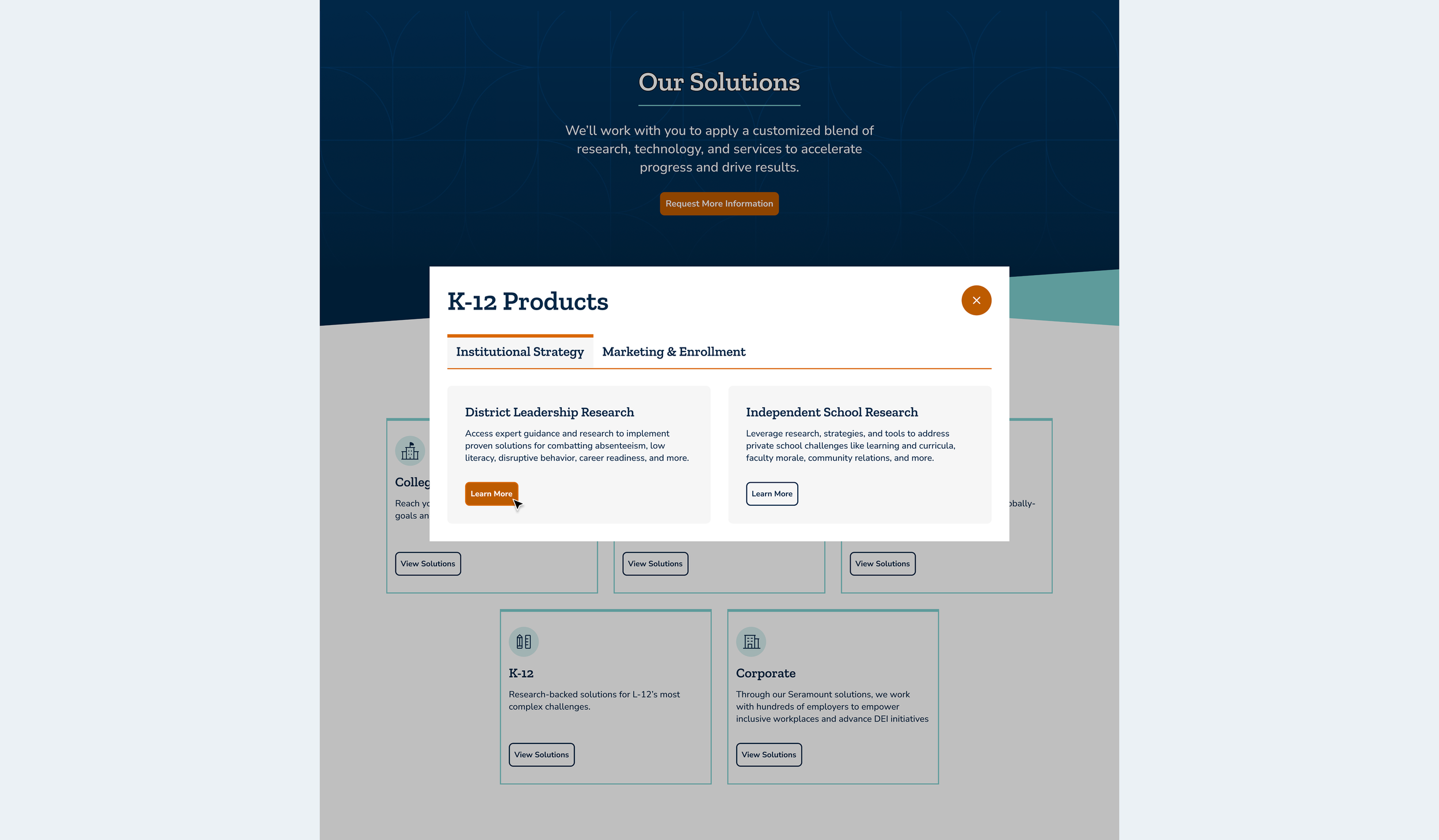
I restructured the top-level architecture to better map to user intent, clarifying institutional applicability and renaming pillars using user language. This establishes a more intuitive entry point and reduces early abandonment.
Design decision 02
Shift to outcome-driven content to strengthen product comprehension
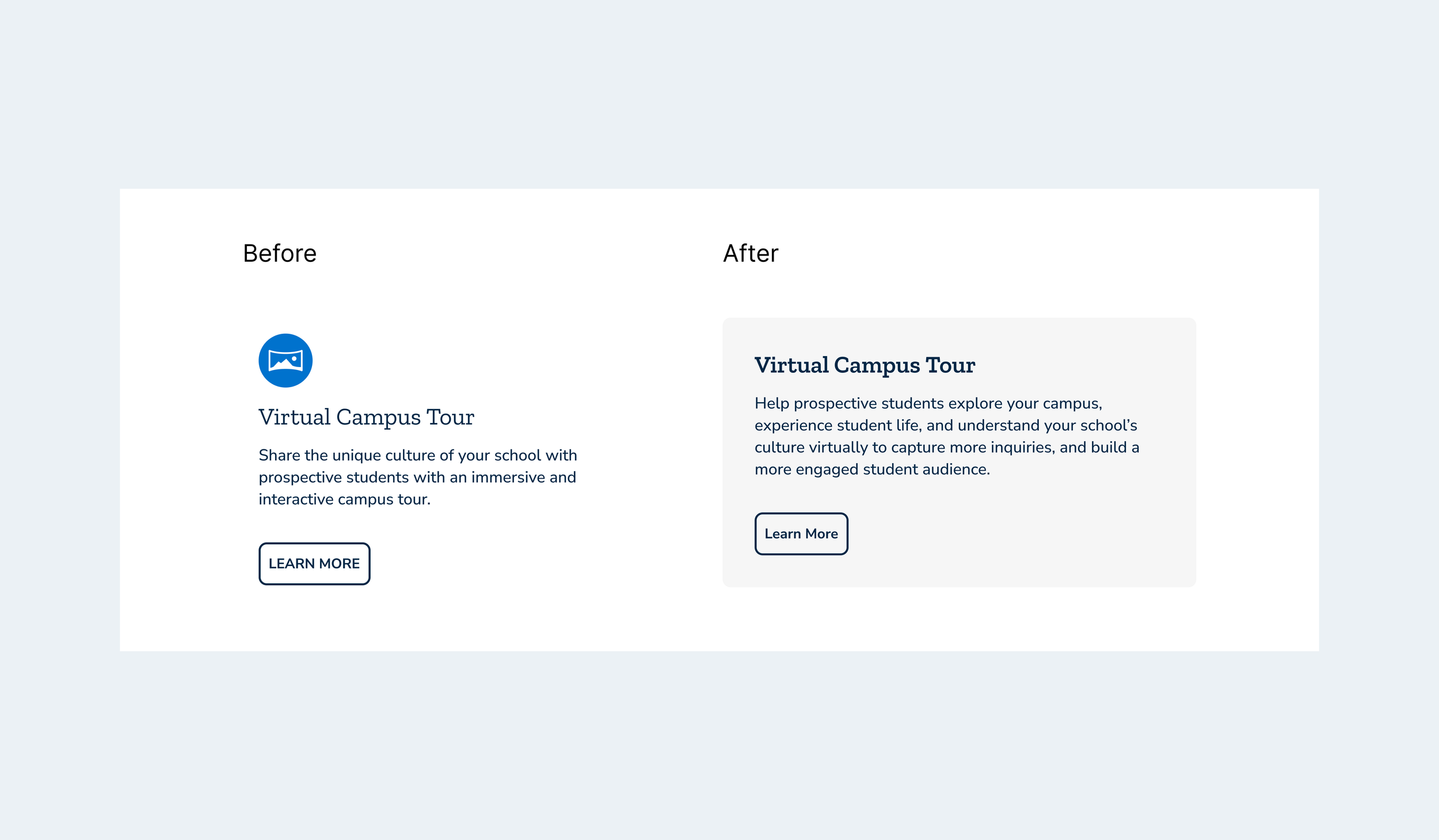
Users struggled to understand how each product provided value and often needed sales guidance to make sense of what would be best for their institution. Feature lists were too abstract and forced users to infer relevance on their own. I partnered with Product Owners to rewrite each solution area using an outcome-first content model, giving users a clearer mental model before they dig into specifics.
Retrospective
Simplifying the experience drove more qualified leads, enhanced customer satisfaction, and moved the business towards a scalable self-service model
Personalized journeys drove more qualified demos: Tailoring discovery to reflect users' institution types and priorities helped surface relevant value faster. This led to a noticeable uptick in demo requests from high-intent users who felt immediately aligned with the solutions we offer.
Improved early discovery lifted customer satisfaction: Making it easier for users to find what matters to them through clearer pathways and relevant content reduced frustration in the first moments of engagement. As a result, satisfaction scores rose, particularly among new and diverse institutional users.
Segmented experiences fueled scalable self-serve growth: Redesigning discovery around institutional needs empowered more users to explore, activate, and convert without sales intervention. This shift improved self-service conversion rates and reduced the burden on high-touch teams.
Before
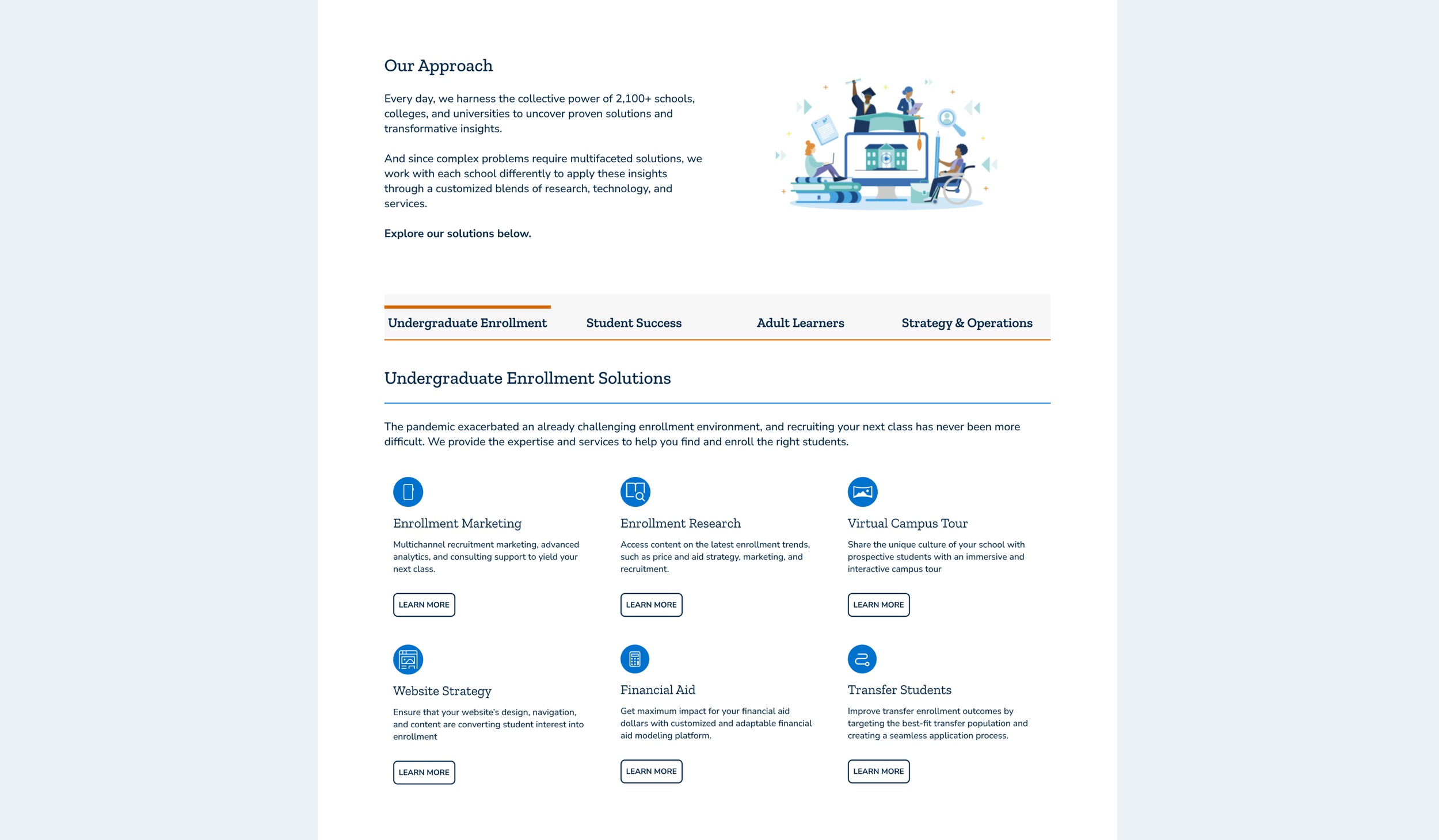
After
Impact
125% increase in satisfaction
User satisfaction score increased dramatically as it became easier to find products.
28% increase in demo requests
The redesign directly lead to an increase in demo requests, as users understood product value.
Scaling for the future
The framework accommodated new products without requiring additional redesigns.
Other projects
-
🔒 Driving org-wide CX adoption through an AI/ML-powered dashboard
-
🔒 Increasing accuracy and process efficiency by 70% through automated screening
-
Simplifying gestational diabetes management for expectant mothers